How to Choose the Best Concrete Block Machine for Your Needs?
Choosing the right Concrete Block Machine is crucial for success in construction. John Smith, a renowned expert in the concrete industry, once stated, “Selecting the right equipment can make or break a project.” His insights highlight the importance of making informed choices.
Concrete Block Machines vary greatly in functionality and design. Each model serves different production needs and budget constraints. Consider factors like production capacity, energy efficiency, and maintenance requirements. The right machine can enhance productivity significantly. However, some may overlook these details, leading to costly mistakes.
Investing in a quality Concrete Block Machine is not just about machinery; it’s about ensuring future success. Assess your specific needs carefully. A thorough understanding of your goals will guide you in selecting the perfect machine. Balancing price with quality might be challenging, but it is essential. Reflecting on your choices now will pay off in the long run.
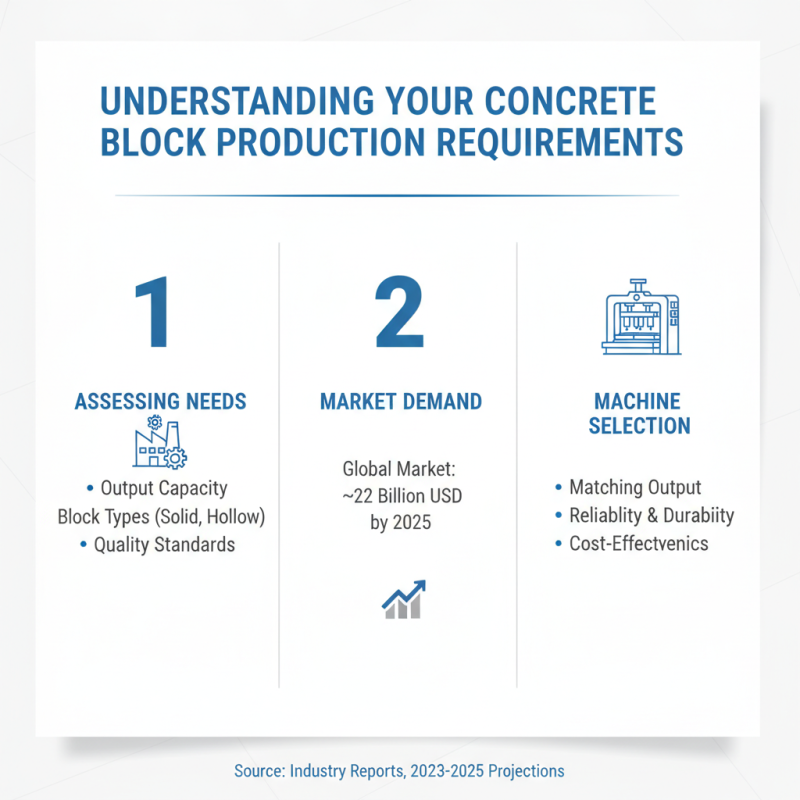
Understanding Your Concrete Block Production Requirements
Choosing the right concrete block machine hinges on understanding your specific production needs. Recent industry reports indicate that global demand for concrete blocks is projected to reach approximately 22 billion USD by 2025. This surge emphasizes the importance of selecting a machine that best fits your output and quality requirements.
Consider your production capacity first. Assess how many blocks you need to produce daily. For instance, smaller operations may benefit from machines with a capacity of 1,000 blocks per day. Larger projects may require machines capable of producing 5,000 blocks or more. Efficiency plays a key role too. Machines with automation features could increase your productivity but may require higher initial investments.
Factors like block type matter significantly. Hollow blocks, solid blocks, and interlocking blocks each demand different machine specifications. Industry standards, such as ASTM C90, influence these designs. Understanding these technical requirements helps avoid costly missteps. Even minor errors in machine selection can lead to production delays or quality issues. Paying attention to the details ensures that your investment aligns with your production vision.
Evaluating Different Types of Concrete Block Machines
When evaluating different types of concrete block machines, it's essential to consider several factors. The most common types include manual, semi-automatic, and fully automatic machines. According to industry reports, the demand for fully automatic machines has increased by 25% over the last few years due to their efficiency and productivity.
Manual machines are suited for smaller projects. They require more labor, which can increase costs over time. On the other hand, semi-automatic machines offer a balance between labor and automation. They boost productivity without needing too many operators. Remember, different projects will necessitate different machines.
**Tip:** Assess your production volume and workforce capability. Machines that can produce at least 1,000 blocks per day are often more cost-effective for larger operations.
Another factor to consider is the energy consumption. Fully automatic machines consume less energy per block produced. This efficiency can lead to savings in operational costs. However, the initial investment is higher, which could be a concern for smaller businesses.
**Tip:** Evaluate the total cost of ownership, not just the initial price. Energy-efficient machines can yield long-term savings that justify a higher upfront cost. Keep in mind, the best choice will often depend on specific project needs and future growth potential.
Comparison of Different Types of Concrete Block Machines
Key Features to Consider When Selecting a Block Machine
Choosing the right concrete block machine is crucial for optimizing production. Several key features can significantly influence your decision. Consider the production capacity first. Machines vary greatly. A larger capacity might improve efficiency, but it requires more space and maintenance. According to industry reports, machines with a capacity of 1,000 to 1,500 blocks per hour are popular for mid-sized operations.
Another essential feature is automation level. Fully automated machines reduce human error and labor costs. A report from Concrete Industry Insights reveals that automation can increase production efficiency by up to 30%. However, higher automation will lead to higher upfront costs, which might not align with your budget.
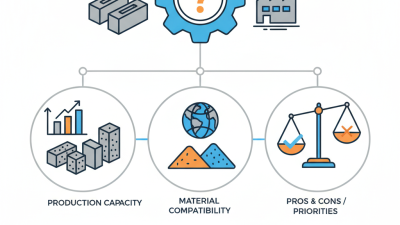
When selecting a block machine, always assess the materials it can process. Some machines accept various raw materials, providing project versatility. Know that specialized machines might limit this, affecting long-term operations. Also, factor in the machine's maintenance needs. Equipment with more complex technology can be more challenging to troubleshoot.
Tips: Regularly read user reviews to gauge reliability. Engage with industry forums to gain insights from experienced operators. Investing in staff training can enhance the operational efficiency of your block machine.
Assessing Budget and Cost-Effectiveness for Your Choice
When selecting a concrete block machine, budget considerations play a crucial role. Determine your financial limits before exploring your options. It's essential to strike a balance between initial investment and long-term profitability. High-quality machines may come with a higher price tag, but they often lead to improved efficiency and durability. Assess the total cost of ownership, including maintenance and operational expenses.
Cost-effectiveness is about more than just the purchase price. Analyze the production capacity of the machine. A more capable machine might generate revenue faster, offsetting its cost. Think about energy consumption too. Efficient machines reduce utility bills and contribute to a greener operation.
Many find it challenging to predict future requirements. Markets fluctuate, and your needs might change. Having a versatile machine can help adapt to new demands. Always consider potential resale value as well. Machines that retain their worth provide a safety net for your initial investment. Evaluate user reviews, but remember that experiences vary. What worked for someone else may not fit your specific needs.
How to Choose the Best Concrete Block Machine for Your Needs? - Assessing Budget and Cost-Effectiveness for Your Choice
| Machine Model |
Production Capacity (Blocks/Hour) |
Power Consumption (kW) |
Estimated Price (USD) |
Cost-Effectiveness Score (1-10) |
| Model A |
900 |
15 |
$25,000 |
8 |
| Model B |
1200 |
20 |
$30,000 |
9 |
| Model C |
1500 |
25 |
$35,000 |
7 |
| Model D |
1000 |
18 |
$28,000 |
8 |
| Model E |
950 |
16 |
$23,000 |
9 |