Why Choose an RCC Pole Making Machine for Your Business?
A concrete pole business depends on consistent production, sound materials, and equipment suited to its daily workload. A Rcc Pole Making Machine can help shape reinforced concrete poles with repeatable dimensions and a more organized production process. Its value, however, depends on more than the machine’s advertised capacity.
Pole length, mold design, reinforcement placement, concrete mix, and curing conditions all affect the finished product. Buyers should compare these requirements with the machine’s specifications, available floor space, power supply, and expected output. Ask about mold changes, vibration or compaction methods, operator training, spare parts, and routine maintenance. These details can influence both production flow and long-term operating costs.
Look beyond the brochure. A supplier’s technical documentation, clear warranty terms, and accessible service support make evaluation more reliable. If possible, inspect a working unit and review sample poles for surface quality and dimensional consistency. No machine can compensate for poor mix control or rushed curing. That matters.
This guide explores why businesses consider RCC pole-making equipment, what features deserve close attention, and how to assess whether a model fits a particular operation. It also recognizes a practical limitation: a higher-capacity machine may not be the best choice for a small facility. Careful comparison can help buyers make a more informed investment, while leaving room to reassess production needs as the business grows.
RCC Pole Basics: Reinforced Concrete Poles in 11 kV Distribution Networks
Reinforced concrete poles support overhead conductors, crossarms, and insulators in 11 kV distribution networks. Their steel reinforcement carries tensile forces, while concrete protects the steel and resists compression. Pole dimensions and strength depend on span, soil conditions, wind exposure, and utility requirements. A well-made pole should have consistent geometry, sound compaction, and correctly positioned reinforcement. Small defects matter.
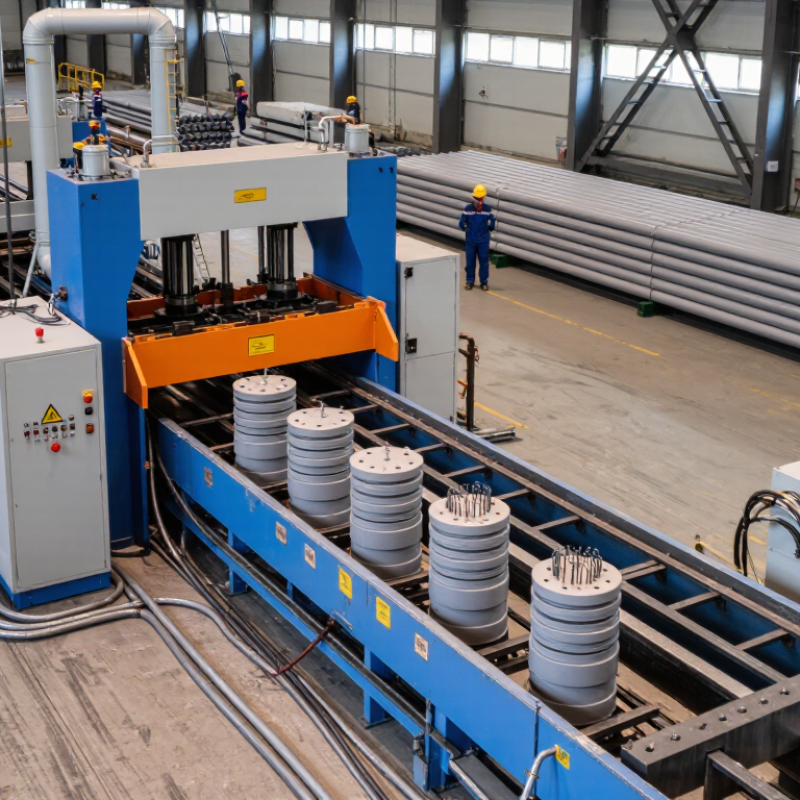
An RCC pole making machine helps control moulding and compaction across production batches. It can reduce variation, but it cannot correct a poor mix design or careless curing. Operators still need to check mould alignment, concrete workability, vibration, and demoulding time. A machine is only as reliable as its process.
Tips: Confirm the pole drawing and loading class before production. Keep reinforcement cages centered, and inspect concrete around the base and lifting points. Record curing conditions. These checks take time, yet skipping them can create costly rework.
For 11 kV use, selection should follow the local distribution authority’s specifications, not a general-purpose catalogue description. Inspect finished poles for cracks, exposed steel, damaged edges, and dimensional deviations. Ask how production quality is monitored, and review test records where applicable. Even with good equipment, results can vary between shifts; routine checks help reveal why. A practical production setup balances output with careful handling and consistent quality control.
Why it matters: RCC pole production should be planned around the voltage classes and structural requirements specified by the local utility. 11 kV, 22 kV, and 33 kV are common distribution voltage levels in many power systems; actual network standards vary by region.
Machine Design: How Molds, Rebar Cages, and Vibration Shape Each Pole
An RCC pole line is only as consistent as its mold, cage, and compaction cycle. Mold halves must close evenly; worn joints can leave fins, leakage, or uneven dimensions. The cage needs to remain centered, with spacers preserving specified concrete cover during casting. Small details matter. The Global Cement and Concrete Association’s 2021 Concrete Future report estimates that about 14 billion cubic metres of concrete are used worldwide each year, making repeatable production a practical concern.
Vibration must consolidate the mix without shifting the cage or separating aggregate. ACI 309R-05, Guide for Consolidation of Concrete, describes how vibration releases entrapped air and helps concrete fill mold corners. Set vibration using mix workability, pole geometry, and equipment guidance; do not copy one setting across every product. No setting is universal. Watch the surface response, then inspect trial poles for honeycombing, exposed steel, and dimensional drift. Vibration cannot fix a poor mix. A clean mold, correctly tied cage, and recorded cycle help trace defects, though the first production run may still need adjustment.
Production Planning: Compare Mold-Cycle Time, Shift Output, and Labor Needs
Why Choose an RCC Pole Making Machine for Your Business?
Production planning starts with the mold-cycle time, not the machine’s advertised capacity. Record loading, concrete placement, vibration, setting, and demolding time for each pole design. A cycle may take longer when reinforcement cages need careful alignment or concrete consistency changes. Measure it. Use several production days to estimate a realistic average, rather than relying on one smooth shift.
Then calculate shift output using available working minutes divided by the full mold cycle. Reduce that figure for cleaning, mold changes, inspections, and minor stoppages. For example, a 30-minute cycle does not guarantee 16 finished poles in an eight-hour shift. Consider curing space and handling capacity, too; otherwise, poles may queue near the molds. Labor needs depend on the workflow. One operator may manage feeding, while separate workers handle cage placement, demolding, and transport. Keep responsibilities clear, but review whether staffing still fits during changeovers.
Tips: Track cycle time and labor hours for each pole size. Compare planned output with finished, inspected poles—not just molds released. Plan conservatively. A small buffer can prevent rushed handling, though your first estimate may still need adjustment.
Why Choose an RCC Pole Making Machine for Your Business? - Production Planning: Compare Mold-Cycle Time, Shift Output, and Labor Needs
| Planning scenario |
Active mold-cycle time |
Molds in rotation |
Planned output per 8-hour shift |
Typical operating crew |
Planning considerations |
| Small-scale / mostly manual workflow |
About 45 minutes per mold |
8 |
About 72 poles |
6 workers |
More hands-on mold preparation and handling; suitable where demand and available floor space are limited. |
| Mid-scale / semi-mechanized workflow |
About 35 minutes per mold |
12 |
About 132 poles |
5 workers |
A balanced option for regular production; material supply and mold turnaround should be coordinated to avoid idle time. |
| Higher-throughput / more mechanized workflow |
About 25 minutes per mold |
16 |
About 256 poles |
4 workers |
Higher output depends on reliable batching, safe material handling, sufficient mold inventory, and adequate curing capacity. |
Planning basis: illustrative estimates for one 8-hour shift, assuming 85% productive operating time (408 minutes) and one pole per completed mold cycle. Shift output is calculated using whole cycles per mold and excludes rejected units. Active cycle time covers production operations; concrete curing time is separate and may require additional molds and curing space. Actual cycle times, staffing, and output vary with pole dimensions, process method, material supply, handling arrangements, and site conditions.
Quality Assurance: Track 28-Day Strength, Dimensions, and Load-Test Results
A pole-making machine earns trust through records, not smooth surfaces alone. For each production batch, log the 28-day compressive strength, mix identification, curing conditions, and specimen results. ACI 318-19, Section 26.12.3.1, provides a useful concrete benchmark: the average of three consecutive strength tests should meet or exceed specified strength. For concrete rated at 5,000 psi or less, no individual test should fall more than 500 psi below that value. This is a benchmark, not a substitute for the pole’s governing product specification. Numbers matter. Keep the laboratory report beside the batch record, so a low result can be traced to its mix and curing history.
Record pole length, base and top diameters, wall thickness, and straightness against approved drawings. Use the same measurement points each time. For load tests, document the applied load, loading direction, deflection, visible cracking, and residual movement after unloading. Set pass limits from the applicable product specification; a load value without test setup details can mislead. A common blind spot is treating one successful test as proof of consistent production. It isn’t. Compare results across batches and flag drift before poles leave the yard. ACI 214R-11 also supports evaluating strength results statistically, rather than judging quality from isolated specimens. One awkward gap remains: careful records cannot fix poor sampling. Shortcuts there weaken the whole assurance system.
Investment Fit: Match Pole Classes and Lengths to Local Utility Standards
Why Choose an RCC Pole Making Machine for Your Business?
Investment fit begins with local utility specifications, not machine capacity alone. Confirm the required pole classes, lengths, base dimensions, lifting points, and reinforcement details before selecting molds. A machine suited to several common sizes may serve a regional order book better than one built around a single high-volume product. Check actual drawings. Small dimensional differences can affect acceptance and installation.
Ask utilities or contractors for recent specifications and realistic annual demand. Then compare those requirements with available mold sizes, changeover time, curing space, and handling equipment. A longer pole may need different yard space and transport planning, even when the machine can produce it. Avoid paying for capacity that local projects rarely use. Forecasts can be wrong; review them against past orders and upcoming tenders. That assumption deserves a second look.
Tips: Keep a simple matrix of pole class, length, mold, and customer specification. Verify revisions before production. If requirements vary, price the extra molds and changeover time—not just the machine. A little spare capacity helps, but it is not free.