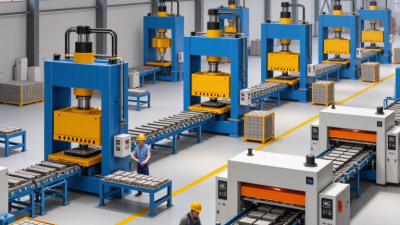
How to Choose a Paver Block Machine in 2026?
Choosing a Paver Block Machine in 2026 starts with the work you need it to do. A small yard serving local orders has different needs from a plant supplying large construction projects. Define the expected daily output, block sizes, and available floor space before comparing models. Then look closely at the complete production line, not only the press. Mixers, molds, conveyors, and curing arrangements can affect output and product consistency. Small details matter. A machine that runs quickly may still cause delays if mold changes are slow or spare parts are difficult to obtain.
Reliable selection also depends on the materials and support behind the equipment. Ask suppliers for specifications, operating instructions, maintenance schedules, and references from comparable installations. If possible, inspect sample blocks and observe a production cycle. Check how the machine handles your intended mix, and confirm which output figures depend on ideal conditions. Real production is less tidy. Dust, operator experience, and routine stoppages can change results. Compare total operating costs, including energy, labor, maintenance, and replacement components, rather than focusing only on the purchase price. Consider safety features and operator training as practical requirements, too. There is no single best machine for every buyer, and a polished brochure cannot settle every question. Use verified data, clear production goals, and candid supplier discussions to make a choice that fits your operation in 2026.
Define Your Paver Block Production Requirements
Define Your Paver Block Production Requirements
Before comparing machines, write down what your yard must produce in a normal week. List each paver size, thickness, colour, and surface finish. Then estimate saleable units per shift, not just the machine’s advertised maximum. The Global Cement and Concrete Association reports that around 14 billion cubic metres of concrete are produced worldwide each year. That scale shows how broad concrete demand is, but it cannot predict local orders for your specific pavers.
Build a simple production estimate from actual orders and seasonal patterns. For example, 4,000 pavers per day over 22 working days means 88,000 monthly units before rejects, maintenance, or changeovers. Allow room for those interruptions. A mold change, damp aggregate, or a slow pallet return can cut real output. Small details matter. Record the available floor space, power supply, curing capacity, pallet count, and the number of workers assigned to each shift.
Check whether your requirement is steady volume or frequent product changes. A contractor supplying one standard size may value repeatable output; a yard serving varied projects may need faster mold changes. Ask suppliers for cycle-time evidence using your mix and product dimensions, then compare trial results with your own target. One estimate may still be optimistic. Revisit it after tracking a few weeks of production and rejected units.
Compare Paver Block Machine Types and Forming Methods
Choosing a paver block machine starts with its forming method, not the largest hourly output claim.
Vibration presses the concrete mix into the mold, helping fill corners and textured faces. Hydraulic pressure adds compaction and can produce dense, consistent pavers, but depends on controlled moisture and accurate settings. Some machines combine both methods.
That matters.
Machine type changes the work around the press.
A manual or semi-automatic unit needs more operator handling and may suit small batches or frequent mold changes. A stationary automatic line can feed, form, and move pallets with less handling, but needs floor space, reliable utilities, and steady demand. Mobile machines reduce transport to the production site, though setup and output can vary with ground conditions.
Check a cycle using your planned mix; advertised figures may omit mold-change time and rejected units.
Compare trial pavers for edge sharpness, thickness, surface pinholes, and breakage after curing. Use the same curing time for each sample. Ask how quickly workers can change a mold and clean the vibrator. Noise, dust, and pallet handling affect daily production, too.
A real production trial may change the decision; even a tidy showroom run can hide awkward mold changes.
Evaluate Capacity, Automation, and Technical Specifications
How to Choose a Paver Block Machine in 2026?
Evaluate capacity against the blocks you actually plan to make. A machine rated for high daily output may not reach it with frequent mold changes, uneven material supply, or long curing schedules. Ask for production figures using your block size and mix, not just a standard test block. Numbers can mislead. Check how many usable pallets the line produces during a full shift, including setup and routine cleaning.
Automation should match your crew’s skills and maintenance resources. Automated batching, feeding, and pallet handling can reduce repetitive work, but poorly understood controls may slow production when a sensor fails. Review the operator interface, alarm history, and manual recovery steps. A short demonstration using realistic production conditions is more useful than a polished sales video. Training matters.
Compare technical specifications that affect the finished block and daily operation: vibration settings, hydraulic pressure, mold dimensions, pallet size, installed power, and dimensional tolerances. Confirm that the machine suits your available floor space and electrical supply. Ask how quickly molds can be changed and where wear parts are located. I would leave room for imperfect assumptions: actual output can vary with aggregate moisture and operator experience. Request a trial run with your own mix, then inspect several blocks for consistent edges, height, and surface finish.
How to Choose a Paver Block Machine in 2026? Evaluate Capacity, Automation, and Technical Specifications
Compare production scenarios using the same eight-cavity mold. The chart estimates theoretical output as mold cavities × cycles per hour; actual output depends on the machine, product, material, and operating conditions.
Planning assumptions: 20, 40, and 60 cycles per hour are example inputs—not guaranteed machine ratings. Before choosing a machine, confirm its rated cycle time, mold configuration, usable production capacity, automation features, power requirements, and service needs with the supplier.
Check Mold Compatibility, Quality Controls, and Maintenance Needs
How to Choose a Paver Block Machine in 2026?
Mold compatibility deserves close attention before comparing production speeds. Confirm that the machine accepts the mold sizes and configurations your projects require. Ask how quickly molds can be changed, and inspect the locking points for wear or looseness. A sample run can reveal uneven filling, chipped edges, or blocks that stick during release. Paper specifications alone may not show these problems.
Quality controls should be practical and repeatable. Check whether operators can adjust vibration, pressure, and cycle timing without guesswork. Look for consistent block height and clean corners across several consecutive cycles. Ask for test results under conditions similar to your materials and working environment. Maintenance matters just as much: accessible bearings, clear lubrication points, and available wear parts can reduce avoidable downtime. I would not assume that the most automated option is always best; complex controls can slow a small team that has not received enough training.
Tips: Bring your current mold dimensions and production targets to the inspection. Request a live trial, then measure several blocks with a simple caliper. Ask what daily checks take, in minutes, and which parts need scheduled replacement. Write down the answers. Details are easy to forget.