Leave Your Message

How to Choose the Right Concrete Electric Pole?

Choosing a Concrete Electric Pole is not a simple matter of comparing prices. It is a structural decision shaped by wind, conductor tension, soil conditions, access, and expected service life. A pole that looks adequate in a catalog may behave differently beside a coastal road or in weak, waterlogged ground. Small details matter.

The International Energy Agency’s 2023 report, Electricity Grids and Secure Energy Transitions, says annual grid investment must rise to more than $600 billion by 2030, from about $300 billion. That figure describes grid investment broadly, not concrete-pole performance. Still, it shows why sound asset choices matter. IEA Executive Director Fatih Birol has emphasized that grids need faster expansion and modernization. For pole selection, that means checking local engineering requirements rather than treating one specification as universal.

Compare the required load capacity, pole height, reinforcement, concrete quality, foundation design, and corrosion exposure. Ask for test records and documented design assumptions. Then confirm that the proposed pole suits the actual span and site conditions. A heavier pole is not automatically the safer choice. Nor does a long service-life claim guarantee performance at every site. The uncomfortable part is that early estimates can be wrong when soil data or loading assumptions are weak. Verify them before procurement. A qualified structural engineer should review the final design.
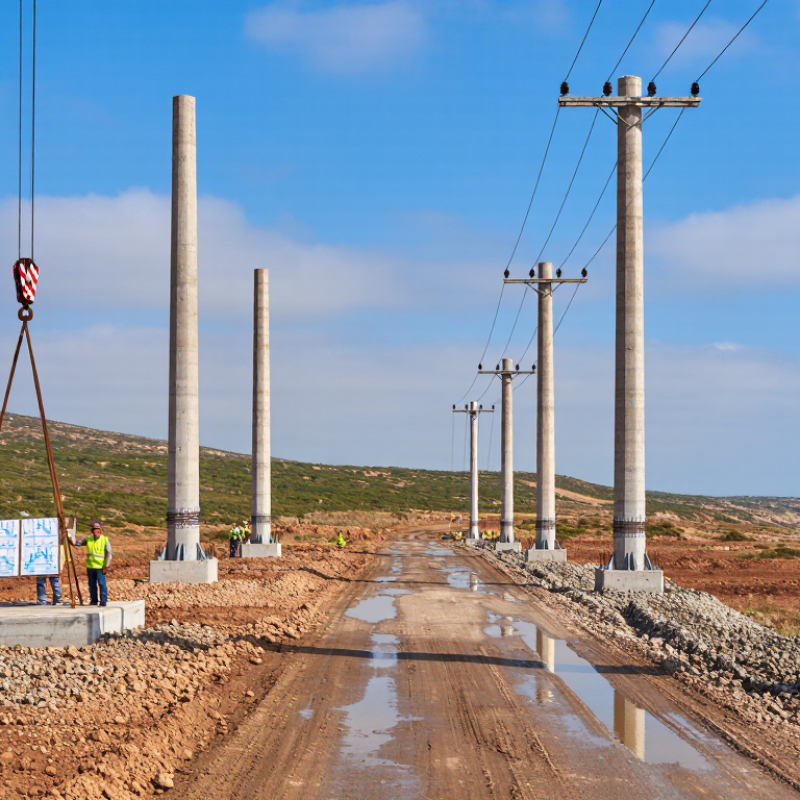
How to Choose the Right Concrete Electric Pole?

Identify the Application and Required Pole Function

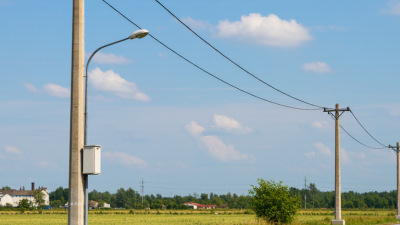
A concrete electric pole should be selected for the job it must perform, not just its height. A distribution pole carries conductors, insulators, and hardware, while a lighting pole supports a luminaire and its mounting arm. Some poles serve more than one purpose, but combined equipment changes the loads and connection details.

Start by listing what the pole will carry. Note conductor positions, crossarms, transformers, streetlights, or communication cables, plus their approximate weights and locations. A pole supporting a transformer needs different structural checks from one carrying only a light. That distinction matters. Also consider wind exposure and conductor tension; both can create significant sideways force.

Then check the site and installation plan. A narrow roadside verge, soft soil, or nearby buried services may affect pole placement, foundation depth, and access for equipment. Record the required working height and clearance, rather than assuming a taller pole solves every problem. It may create new loading or access issues. Compare the site details with the pole’s rated capacity and applicable utility requirements, and have a qualified engineer confirm the design. One detail is easy to miss: future attachments can change the pole’s duty, so allow for planned upgrades before choosing a specification.

Assess Loads, Span, and Environmental Conditions

How to Choose the Right Concrete Electric Pole?

Assess Loads, Span, and Environmental Conditions

Start with the pole’s complete load case, not its height alone. Include conductor tension, attached equipment, wind, and possible ice. Longer spans increase conductor sag and the forces transferred to each pole. NESC 2023 provides national electrical safety loading criteria, while ASCE 7-22 supports site-specific wind hazard assessment. A span copied from a nearby project may still be wrong here.

Environmental conditions can change the specification. NOAA’s National Centers for Environmental Information recorded 28 U.S. billion-dollar weather and climate disasters in 2023; this is a national risk indicator, not a local design load. Use the ASCE Hazard Tool for location-specific wind data. For concrete durability, check ACI 318 exposure categories for freeze-thaw cycles and chlorides. Coastal salt spray, wet soil, and repeated freezing can affect service life. Small details matter.

Tips: Confirm span, wire tension, and equipment weights with the utility’s design data. Check soil bearing capacity and foundation depth, too. Ask the engineer to document assumptions. I would revisit them after a site inspection; drawings do not always capture drainage or local exposure.

Compare Pole Types, Dimensions, and Strength Ratings

Concrete electric poles differ in construction, dimensions, and load capacity. Reinforced concrete poles use steel bars within the concrete. Prestressed poles use tensioned steel strands, which help resist bending and cracking. Spun poles are made in rotating molds and often have a hollow core. Each type has trade-offs in weight, handling, and site requirements. Small details matter.

Compare the pole’s overall length, top diameter, ground-line diameter, and specified embedment depth. A longer pole may provide needed clearance, but it also faces greater wind leverage. Check conductor spacing, crossarms, mounted equipment, and local soil conditions together. Strength ratings describe more than pole weight. Review the rated bending moment or working load, the direction of loading, and the safety factors behind the rating. Rating labels can look comparable while using different test assumptions, so confirm the supplier’s technical data.

A practical selection starts with the actual line layout and expected loads, including wind, ice, and transformers where applicable. Ask an engineer to verify the pole class against those conditions and the relevant project standards. Do not choose by height alone. In the field, access for transport and lifting can change what is practical; it is easy to overlook this until delivery day. Check for visible cracks, chipped edges, and clear documentation before installation. A perfect-looking pole is not automatically the right one.

Check Standards, Safety, and Installation Requirements

How to Choose the Right Concrete Electric Pole?

Choosing a concrete electric pole starts with its actual loads, not its appearance. Confirm voltage, conductor tension, crossarms, equipment weight, and local wind and ice exposure. Then check the pole’s design documents against the applicable National Electrical Safety Code (ANSI/IEEE C2) and the relevant ASTM requirements for prestressed concrete poles. Ask for certified test results, reinforcement details, and the specified design load. A clean surface alone proves little. The U.S. Energy Information Administration’s Electric Power Annual tracks customer outage duration, including major events; that reliability context is a reminder that pole selection affects more than the structure itself.

Safety and installation conditions matter just as much. Verify soil strength, burial depth, groundwater, access for lifting equipment, and clearance from energized conductors before ordering. A qualified engineer should review foundation and loading assumptions for the actual site. During installation, inspect lifting points and rigging, keep workers clear of suspended loads, and check alignment before backfilling. A heavier pole is not automatically safer; that assumption deserves a second look. Missing site data can make even a well-built pole the wrong choice.

Tips: Keep the approved drawings and test certificates with the job records. Photograph the excavation, pole setting, and final alignment. If field conditions differ from the plan, pause and get the design reviewed rather than improvising.

Evaluate Durability, Maintenance, and Total Cost

A concrete electric pole can look sound while moisture and de-icing salts slowly reach its reinforcement. Check the mix design, concrete cover, curing records, and test results for the actual exposure. ACI’s 365.1R-17 service-life report explains that durability estimates depend on materials, exposure, and maintenance—not a single guaranteed lifespan. Small details matter. Ask how the pole handles freeze-thaw cycles, wet soil, and lifting damage. A chipped base deserves attention; water can enter through cracks and accelerate reinforcement corrosion.

Compare total cost over the same period, not just purchase price. Include transport, installation equipment, inspections, repairs, replacement, and disposal. The Federal Highway Administration’s life-cycle cost guidance uses a 35-year analysis period for new pavement projects. That is not a prediction of pole life, but it illustrates why long-term costs should be evaluated consistently. Ask suppliers for inspection intervals and repair procedures, then price those tasks locally. A remote site may make one repair costly. And estimates can be imperfect: soil conditions and storm exposure vary, so test assumptions against site records rather than treating a spreadsheet as certainty.

How to Choose the Right Concrete Electric Pole? — Evaluate Durability, Maintenance, and Total Cost

Evaluation factor Centrifugally spun prestressed concrete Vibrated prestressed concrete Conventionally reinforced precast concrete
Construction Concrete is compacted by spinning; prestressing strands provide tensile capacity. The pole is commonly hollow, though details vary by design. Concrete is consolidated by vibration around prestressing steel. Cross-section and manufacturing details depend on the pole design. Concrete is cast around reinforcing bars without prestressing. Poles may be solid or hollow, depending on the design.
Durability considerations A dense, well-cured surface can help limit water and chloride ingress. Durability still depends on concrete quality, cover, curing, exposure, and handling. Performance depends on mix quality, consolidation, curing, prestress design, and protection of embedded steel. Performance depends on concrete quality, reinforcement cover, crack control, curing, and exposure conditions.
Cracking and damage Prestressing helps control tensile cracking under design loads. Inspect for cracks, impact damage, chips, and exposed strands. Prestressing helps control tensile cracking under design loads. Check for transport or erection damage and any cracks that may admit moisture. Cracks can allow moisture and salts to reach reinforcement. Assess crack width, location, and any signs of rust staining or spalling.
Maintenance profile Usually requires inspections and condition-based repairs rather than routine surface coating. Repair needs depend on damage and environment. Usually requires inspections and condition-based repairs. Address significant cracking, spalling, or exposed steel according to engineering guidance. Requires inspections for cracking, spalling, and reinforcement corrosion. Local repairs may be needed if the protective concrete cover is damaged.
Handling and installation Concrete poles are heavy and require suitable lifting equipment, transport access, and installation planning. Confirm approved lifting points. Requires transport and lifting equipment sized for the pole. Check site access, foundation compatibility, and erection procedures. Weight and handling requirements vary with size and reinforcement. Confirm lifting arrangements and foundation design before delivery.
Best suited to Projects where the specified spun-prestressed design meets the required working loads, dimensions, exposure conditions, and local standards. Projects where the available prestressed design meets structural and site requirements and can be supplied with suitable certified documentation. Projects where a reinforced design meets the required loads and exposure conditions, and its inspection and repair needs are acceptable.
Total-cost evaluation Compare the same design life and scope for every option: purchase price + transport + foundation work + installation + inspections and maintenance + expected repairs + replacement and disposal. Use local quotations and project-specific assumptions; a lower purchase price does not necessarily mean a lower life-cycle cost.
Information to verify before selection Required pole height and working load; load combinations and safety factors; applicable standards; concrete strength and reinforcement details; exposure class; foundation and soil conditions; test or compliance documents; transport limits; warranty terms; and inspection or repair guidance.

Note: No construction type is automatically the most durable or lowest-cost choice. Service life and maintenance depend on the design, manufacturing quality, installation, loading, climate, soil, and inspection practices. Have a qualified engineer confirm pole and foundation suitability for the project.