Leave Your Message

How to Choose a Clay Bricks Machine in 2026?

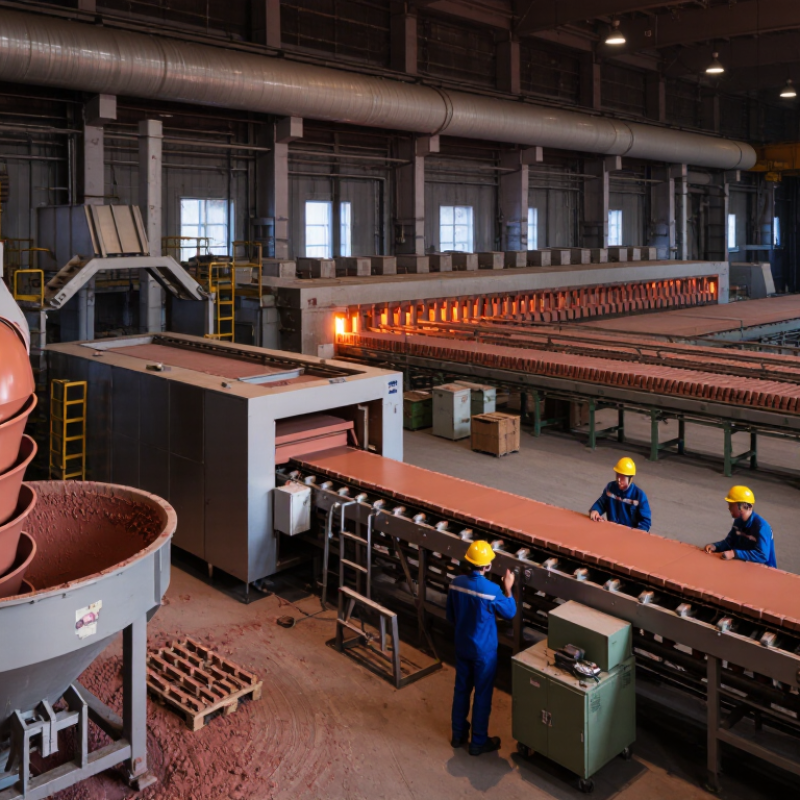
Choosing a Clay Bricks Machine in 2026 requires more than comparing product prices and hourly output. A machine that looks efficient in a brochure may struggle with wet clay, uneven particle sizes, or frequent power fluctuations. The right choice depends on your clay deposit, target brick dimensions, production scale, available fuel, and local maintenance support. Small details matter. A poorly matched die can leave rough edges. Excess moisture can cause cracks during drying.

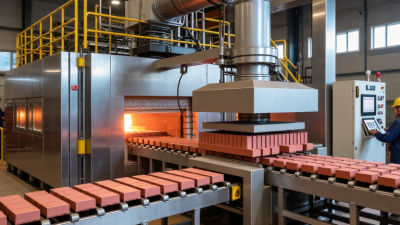
In practical plant evaluations, operators should inspect the complete production line, not only the forming machine. Check the mixer, vacuum extruder, cutter, dryer, kiln, and control system as one connected process. Ask for test production using your own clay sample. Watch the brick surface, cutting accuracy, drying behavior, and waste rate. Request documented energy figures and verified customer references. A trustworthy manufacturer should explain both strengths and limitations clearly.

No machine is perfect.

I have seen buyers focus heavily on automation while overlooking spare parts, technician response times, and operator training. That decision often creates avoidable downtime later. Some newer systems offer impressive controls, but complex electronics may be difficult to repair in remote areas. A simpler machine can sometimes deliver better long-term reliability. This is not always true, and that uncertainty deserves attention. This guide will help you compare technical performance, ownership costs, safety features, and supplier credibility before selecting a Clay Bricks Machine for 2026.

How to Choose a Clay Bricks Machine in 2026?

Define Brick Size, Output, and Capacity Targets: 10,000–100,000 Bricks/Hour

Choosing a clay bricks machine starts with the brick itself. Define length, width, height, wall thickness, and acceptable dimensional tolerance. A 240 × 115 × 70 mm brick needs different tooling from a thin partition brick. Small size changes can affect mold wear, drying behavior, and stacking patterns.

Set the target output between 10,000 and 100,000 bricks per hour. Do not trust the headline number alone. Ask whether it means wet bricks, finished bricks, or theoretical machine capacity. A practical estimate should include clay feeding, cutting, mold changes, cleaning, and short stoppages. For example, a machine rated at 50,000 bricks per hour may produce less during routine operation. That difference matters.

Capacity must match your drying and firing systems. Producing 80,000 green bricks hourly is useless if the dryer accepts only 45,000. Check clay moisture, extrusion pressure, power demand, operator requirements, and spare-part access. I would also request a test using your clay, because laboratory clay can behave unusually well. This step may feel slow, but it prevents an expensive mismatch. Some production plans look efficient on paper and fail during rainy weeks. Leave room for maintenance, uneven feeding, and human error. Calibration records and sample measurements should be reviewed before signing any purchase agreement.

Match Clay Preparation Systems to Moisture Levels of 15%–25%

How to Choose a Clay Bricks Machine in 2026?

Choosing a clay bricks machine in 2026 starts with moisture, not only production speed. Clay containing 15% moisture behaves differently from clay containing 25%. Measure moisture from several stockpile points, not one convenient scoop. A laboratory oven test gives more dependable results than hand judgment. Still, field readings can vary after rain, storage, or prolonged sun exposure.

At 15%–18%, clay is relatively stiff and may need stronger crushing and intensive mixing. A toothed crusher, roller mill, and pugmill can improve particle blending before forming. From 18%–22%, a balanced preparation line usually provides stable plasticity. Adjustable water dosing becomes important here. At 22%–25%, clay may feed easily but stick to surfaces and deform during extrusion. Mixing time, drainage control, and die pressure deserve close attention. A vacuum extruder can remove trapped air, but it cannot correct excessive water.

I once approved a machine after testing only the morning batch. That was a mistake. The afternoon clay produced softer columns and uneven brick edges. Now, I compare samples across a full production day and record moisture, motor load, vacuum level, and extrusion pressure. Operators should also inspect the cut face every hour. Small cracks matter. Moisture targets should remain flexible because clay mineral content changes the result. A machine that performs well at 18% may struggle at 23%. Testing the actual clay remains more reliable than trusting a catalog specification.

Compare Extrusion Pressure, Vacuum, and Motor Power for Quality Control

How to Choose a Clay Bricks Machine in 2026?

Extrusion pressure strongly influences brick density, edge definition, and dimensional stability. A machine rated at 1.5–2.5 MPa may suit many standard clay bodies, but the number alone proves little. Pressure must remain stable while moisture changes during production. Test the clay.

Vacuum de-airing removes trapped air before extrusion, reducing laminations and surface cracks. A practical trial range is often near -0.08 to -0.095 MPa, though clay plasticity and chamber design can shift the result.

The International Energy Agency’s Energy Efficiency 2023 report states that industry used about 37% of global final energy in 2022, so energy control deserves equal attention. The U.S. Department of Energy’s Industrial Motor Systems Market Assessment links motor systems to roughly 70% of U.S. manufacturing electricity use.

Motor power should match the target output, not simply look impressive on a specification sheet. Oversized motors raise purchase and operating costs. Undersized motors suffer overloads and unstable extrusion.

I have seen operators compare kilowatts but ignore gearbox efficiency, screw wear, and actual clay resistance. That comparison is incomplete.

Measure amperage, pressure, vacuum level, and brick weight during a full production trial. ASTM C62 requirements also remind buyers that durability and absorption matter, not appearance alone.

No machine setting works perfectly for every clay deposit. Trial data should decide.

Evaluate Kiln Fuel Use, Firing Ranges of 900–1,100°C, and Emissions

How to Choose a Clay Bricks Machine in 2026?

Kiln fuel use should be measured per tonne of fired bricks, not guessed from motor size. A practical trial should record green brick moisture, loading weight, firing time, and fuel consumed. In one plant assessment, a small moisture increase created noticeably higher fuel demand. That detail is easy to miss.

Choose equipment that maintains a stable firing range between 900°C and 1,100°C. Lower temperatures may leave bricks weak or underfired. Excessive heat can cause warping, bloating, and wasted fuel. Ask for temperature records from several kiln zones, not one display reading. Thermocouples, insulation thickness, burner control, and air circulation all affect results. Test your own clay. Laboratory data can mislead when production conditions change.

Emissions deserve equal attention. Check the kiln’s dust control, combustion efficiency, and exhaust monitoring system. Request measured carbon monoxide, nitrogen oxides, sulfur compounds, and particulate emissions during a normal firing cycle. Fuel quality matters too. Cleaner combustion does not always mean lower total emissions if the kiln loses heat. I once relied too heavily on a supplier’s fuel estimate; actual use rose after uneven stacking reduced airflow. That mistake changed my evaluation method. Review maintenance access, alarm records, and operator training before choosing the machine. Reliable equipment should provide traceable data, realistic performance limits, and room for improvement.

Verify ASTM C62, ASTM C216, or EN 771-1 Compliance Before Buying

How to Choose a Clay Bricks Machine in 2026?

A clay bricks machine should be selected against the standard your finished bricks must meet. ASTM C62 generally covers building bricks, while ASTM C216 addresses facing bricks. EN 771-1 applies to fired clay masonry units in European markets. These standards are not interchangeable. Check the project location and buyer requirements before comparing machine prices.

Ask the supplier how the machine controls moisture, pressure, drying, and firing temperature. These factors directly affect compressive strength, water absorption, dimensions, and durability. Request recent laboratory reports using clay similar to yours. A factory test with different raw material proves little. Verify whether testing came from an independent laboratory. Do not rely on a certificate photo alone.

I once saw a production line make attractive bricks that failed absorption testing. They looked ready for construction. They were not. Require trial samples and test them against ASTM C62, ASTM C216, or EN 771-1 requirements. Check batch consistency, not only one excellent sample. Ask for calibration records, quality-control procedures, and the exact standard edition used. Some suppliers may promise compliance, but the machine itself is not automatically certified. Your production process must repeatedly create compliant units. Mistakes happen. Plan for retesting.

How to Choose a Clay Bricks Machine in 2026? - Verify ASTM C62, ASTM C216, or EN 771-1 Compliance Before Buying

Evaluation Dimension ASTM C62 ASTM C216 EN 771-1 Machine-Buying Implication
Standard title and product scope Standard Specification for Building Brick, made from clay or shale. Standard Specification for Facing Brick, made from clay or shale and intended for exposed architectural surfaces. Product standard for clay masonry units used in masonry construction in European markets. Select the machine according to the intended product: structural building brick, exposed facing brick, or European-format masonry units.
Main performance properties Compressive strength, absorption, saturation coefficient, dimensional tolerances, efflorescence, and durability-related requirements. Compressive strength, absorption, saturation coefficient, dimensional tolerances, efflorescence, color, texture, and appearance requirements. Compressive strength category, dimensional tolerances, density, configuration, water absorption, durability, and reaction-to-fire declarations where applicable. The machine must provide stable dimensions, uniform density, controlled moisture, and repeatable firing results—not only high output.
Strength classification Uses Severe Weathering, Moderate Weathering, and No Weathering grades. Required values depend on the selected grade and applicable table in the current edition. Uses Severe Weathering, Moderate Weathering, and No Weathering grades. The selected grade determines the required performance level. Strength is declared using compressive-strength categories and designations specified by the manufacturer and applicable national provisions. Ask for test results from representative fired bricks. A machine rating in pieces per hour does not prove compressive-strength compliance.
Dimensional accuracy Dimensions and permissible variations are evaluated according to the specified brick type and grade. Dimensional tolerances and visual requirements are particularly important because the brick is intended for exposed faces. Dimensional tolerances are declared through tolerance categories and product designations under the standard. Prefer a rigid die, accurate vacuum extrusion, consistent cutting wire, and automatic length compensation to reduce size variation.
Raw-material preparation Clay or shale must be processed to achieve the required fired properties. Clay or shale must support consistent appearance, texture, dimensions, and durability after firing. Clay masonry units require controlled composition and manufacturing processes suitable for the declared product properties. Include a box feeder, roller crusher, pan mill or fine crusher, screening, and homogenization. Confirm the machine can handle the actual clay particle size and plasticity.
Moisture and extrusion control The standard does not approve a particular forming machine; the finished brick must meet the applicable requirements. Consistent forming is essential for uniform face texture, dimensions, and firing behavior. Production control must support consistent declared properties throughout the product range. Require adjustable water dosing, vacuum monitoring, extrusion-pressure control, and an easy-to-change die system. Moisture settings must be validated with local clay.
Drying system The finished product must satisfy the standard after drying and firing; the standard does not prescribe one dryer design. Controlled drying is necessary to protect sharp edges and visible faces from cracking or warping. The manufacturing process must achieve consistent product characteristics and declared performance. Choose a dryer with adjustable temperature, humidity, airflow, and residence time. Check that the design matches the brick size, stacking method, and local climate.
Firing capability Firing must produce bricks that meet the required physical and durability properties. Firing must also preserve required face color, texture, dimensions, and appearance consistency. The fired units must meet the declared categories and performance requirements under the applicable product standard. A continuous kiln with multiple independently controlled zones, temperature recording, burner adjustment, and proper cooling control is preferable for consistent quality.
Surface and appearance Appearance requirements depend on the specified product and grade. Surface texture, color range, edge condition, chips, cracks, and other visible characteristics are important. Appearance and configuration must correspond to the declared product type and applicable requirements. If facing brick is required, evaluate die design, cutting accuracy, surface treatment, kiln atmosphere control, and sorting equipment.
Testing and verification before purchase Request independent laboratory results covering compressive strength, absorption, saturation coefficient, dimensions, and efflorescence where applicable. Request test reports covering strength, absorption, dimensions, appearance, efflorescence, and durability-related requirements for the selected grade. Request a declaration of performance or equivalent technical documentation, applicable test methods, declared categories, and factory production-control information. Use the same clay, target brick size, moisture range, and firing profile in a pilot run. Approve the machine only after testing representative fired samples.
Production capacity to compare Capacity is not specified by the product standard. Capacity is not specified by the product standard. Capacity is not specified by the product standard. Compare usable fired output, not only extruder output. Account for drying losses, kiln yield, rejects, changeover time, and the selected brick dimensions.
Recommended purchase decision Suitable when the target market requires building brick tested to the applicable ASTM C62 grade. Suitable when exposed architectural brick must satisfy the applicable ASTM C216 grade and appearance requirements. Suitable when the target market requires clay masonry units documented under EN 771-1 and relevant national provisions. Choose the complete process line—preparation, forming, drying, firing, inspection, and testing—rather than selecting an extruder by advertised capacity alone.
Important verification note: ASTM C62, ASTM C216, and EN 771-1 are product standards. They generally specify the performance and conformity requirements of finished clay masonry units, not a universal machine design or a guaranteed production capacity. Require current-edition test methods, representative fired-brick samples, and independent laboratory verification before placing the final order.